
Effingham County Superior Court
Georgia's broad trial court is Superior Court. In Effingham County, Superior Court is part of the Ogeechee Judicial Circuit with Bulloch, Jenkins, and Screven counties. It handles felony criminal prosecutions, divorce, equity, title-to-land matters, major civil cases, and appeals from lower courts when authorized. The Clerk of Superior Court supports Superior Court records and also serves State Court and Juvenile Court record functions.
Effingham County court records are divided by function. Superior Court is not the only place a case may be filed. Magistrate Court handles small claims, dispossessory cases, garnishments, pre-warrant applications, bad-check warrants, ordinance hearings, and bail matters where not exclusively assigned elsewhere. Probate Court handles estates, guardianships, conservatorships, marriage licenses, vital records, and related licenses. Rincon and Guyton municipal courts handle city traffic and ordinance cases.
The U.S. District Court for the Southern District of Georgia is separate from Effingham County Superior Court. It handles federal crimes, federal civil cases, federal-question matters, and other federal jurisdiction cases. County Superior Court records and federal district court records are searched through different systems.
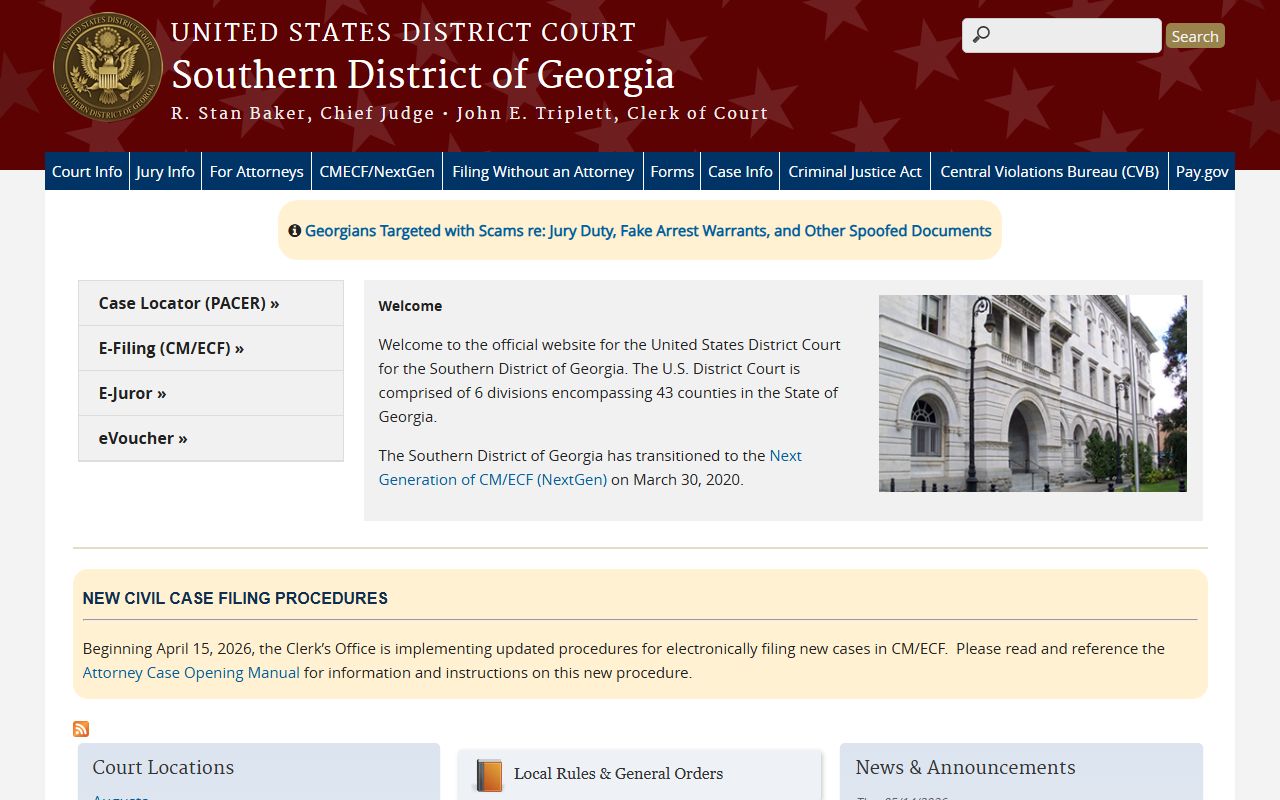
Use federal channels only when the case is truly federal; ordinary Effingham County Superior Court records remain with the county court and clerk.
Effingham County Court List
The research did not identify separate numbered Superior Courts in Effingham County. The practical court list is organized by court class and office rather than court number. Use this table to choose the correct court before searching records, calling a clerk, or appearing for a hearing.
| Court / Office | Type | Address | Phone |
|---|---|---|---|
| Superior Court / Clerk of Superior Court | General jurisdiction trial court | 700 N. Pine Street, Suite 110, Springfield, GA 31329 | 912-754-2118; civil/criminal 912-754-2146 |
| State Court | County trial court functions managed through the Clerk | 700 N. Pine Street, Suite 110, Springfield, GA 31329 | Traffic tickets 912-754-2163 |
| Magistrate Court | Small claims, dispossessory, warrants, bad checks, ordinance hearings | 700 N. Pine Street, Suite 250, Springfield, GA 31329 | 912-754-2124 |
| Probate Court | Estates, guardianships, conservatorships, marriage, vital records | 700 N. Pine Street, Suite 146, Springfield, GA 31329 | 912-754-2112 |
| Rincon Municipal Court | City traffic and ordinance cases | Courtroom 107 W. 17th Street; mailing 302 S. Columbia Avenue, Rincon, GA 31326 | 912-826-5665; 912-826-5745 |
| Guyton Municipal Court | Guyton traffic citations | 505 Magnolia Street; City Hall 310 Central Boulevard, Guyton, GA 31312 | 912-772-3353 |
The federal bankruptcy court is also separate from Effingham County Superior Court. The U.S. Bankruptcy Court for the Southern District of Georgia is the correct route for bankruptcy dockets, claims, and bankruptcy orders.
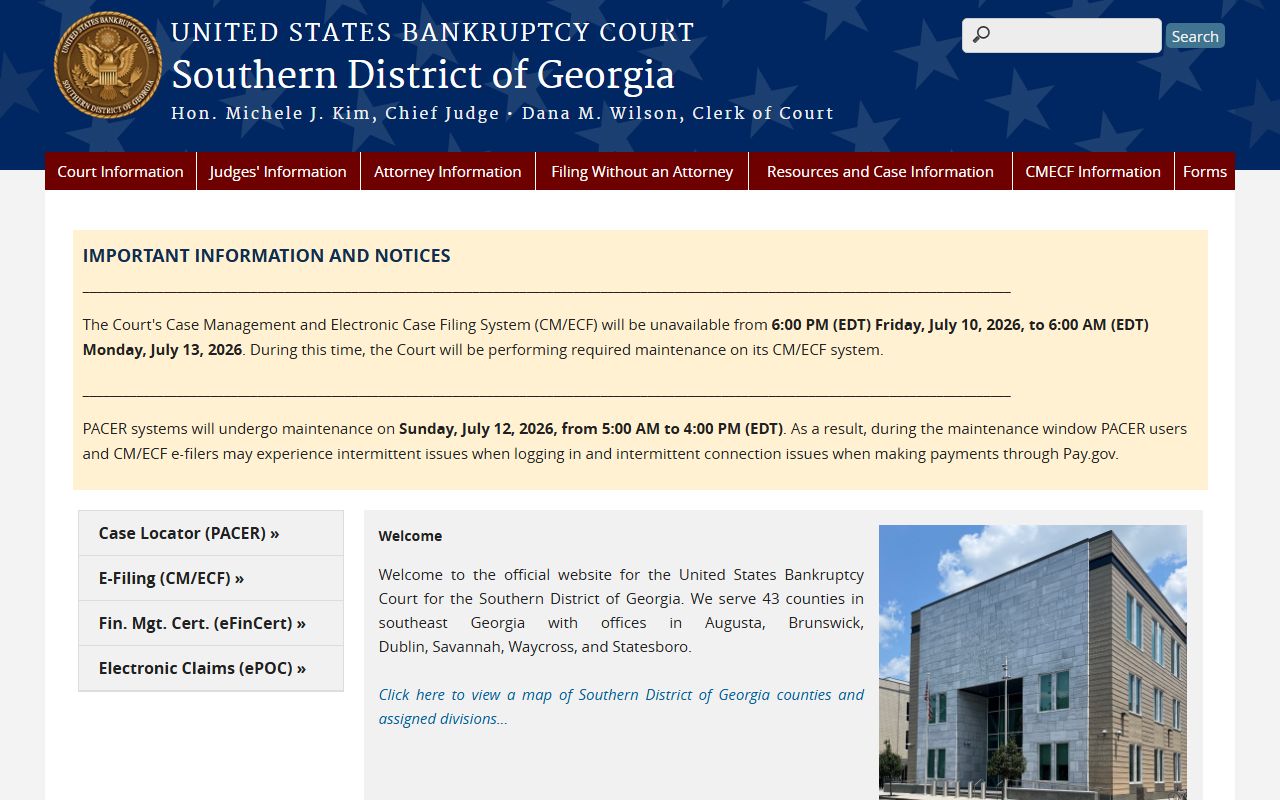
Bankruptcy records should not be requested from the Effingham County Clerk of Superior Court unless a separate state-court lien or judgment is involved.
Superior Court vs Lower Courts
Effingham County Superior Court records are only one part of the county court system. Georgia's local structure makes the case type the key search decision. A felony or divorce belongs in Superior Court, while a small claim, dispossessory case, bad-check warrant application, or municipal citation may never appear as a Superior Court case unless it is appealed or connected to a higher-court matter.
| Issue | Superior Court | Magistrate Court | Municipal Court |
|---|---|---|---|
| Main case types | Felonies, divorce, equity, major civil, title-to-land, appeals | Small claims, dispossessory, garnishment, warrants, bad checks, ordinance hearings | City traffic and ordinance citations |
| Civil limit | Major civil matters and matters outside lower-court limits | $15,000 general civil limit, except dispossessory | City-code matters, not the general county civil forum |
| Records office | Clerk of Superior Court | Magistrate Court | Rincon or Guyton municipal court |
| Search path | Clerk Case Management and clerk counter | Magistrate office and archived civil docket pages | City court or payment vendor, depending on city |
Georgia probate jurisdiction is another separate lane. O.C.G.A. Section 15-9-30 describes probate jurisdiction over estates, guardianships, marriage licenses, and other matters. Those files are not Superior Court records just because they are court records.
When the record involves an estate or guardianship, the Probate Court route is more accurate than a Superior Court search.
Effingham Superior Case Flow
Case movement depends on whether the matter is criminal, civil, family, probate, or lower-court. In criminal matters, Magistrate Court may be involved early through warrants, bonds, and first-appearance functions, while the Superior Court file carries felony prosecution records after charges move into the trial court. Civil and family filings begin with pleadings at the clerk office, then move through answers, motions, hearings, orders, trial if needed, judgment, and appeal.
Criminal flow: Arrest › Magistrate / first appearance › indictment, accusation, or information › arraignment › pretrial motions › plea or trial › disposition › sentencing › appeal.
Civil flow: complaint or petition filed › service › answer › motions › discovery › mediation or hearing › trial if needed › judgment › post-judgment actions › appeal.
Federal cases follow a different path and are searched through PACER. The official PACER system is used for federal district, bankruptcy, and appellate court records.
Do not use PACER for ordinary Effingham County Superior Court records unless the dispute has become a federal case.
Note: The public docket may show events and status without showing every document image in the court file.
Effingham Court Divisions
Effingham County Superior Court records can include felony criminal files, civil actions, divorce and domestic cases, equity actions, title-to-land matters, and lower-court appeals. The Clerk forms page supports that range with divorce packets, custody forms, child support worksheets, income deduction forms, legitimation petitions, contempt motions, service-by-publication forms, settlement agreements, and name-change forms.
State Court functions are also managed by the Clerk of Superior Court. Traffic-ticket contact is listed separately from the general clerk line, which matters for users trying to pay or research State Court traffic matters. Juvenile Court duties are performed by the Superior Court Clerk, but juvenile files are restricted and should not be treated as public online records.
Georgia law also gives superior-court clerks specific duties. O.C.G.A. Section 15-6-61 covers clerk duties such as keeping the office and court papers, issuing process, and maintaining required records.
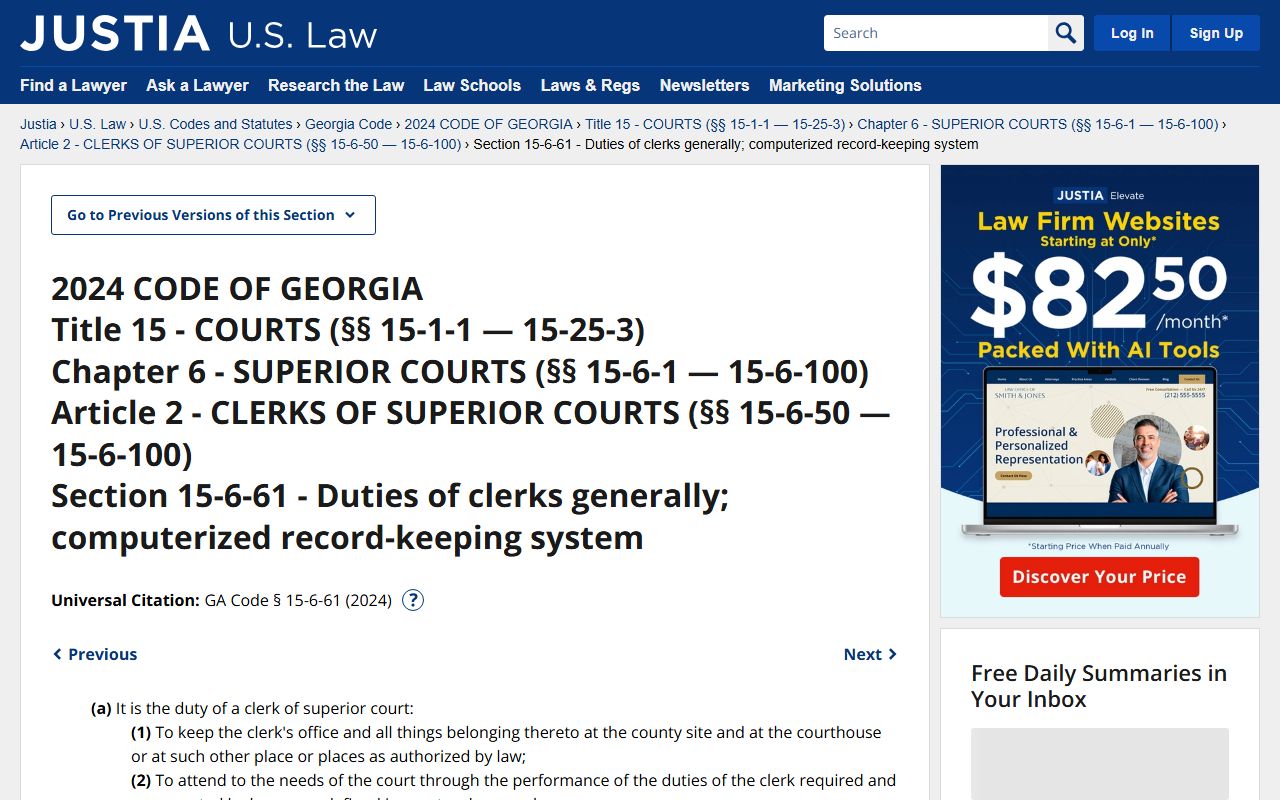
That statute supports why Superior Court record requests usually run through the clerk rather than directly through a judge's chambers.
Ogeechee Judicial Circuit
Effingham County Superior Court is in the Ogeechee Judicial Circuit with Bulloch, Jenkins, and Screven counties. Circuit sources and local directory materials list judges including Michael T. Muldrew, Lovett Bennett Jr., F. Gates Peed, Ronald K. Thompson, and Matt Hube, but judge rosters can change. The safest way to confirm the current judge assignment, calendar, or circuit contact is to use the official circuit or county court directory at the time of the request.
The Ogeechee Circuit also has problem-solving court functions. The Clerk links to Ogeechee Mental Health and Drug Court, which serves Bulloch, Effingham, Jenkins, and Screven counties. The research says Mental Health Court was implemented in Bulloch County in September 2013, and both Mental Health Court and Drug Court expanded circuitwide in July 2018 under Judge Michael T. Muldrew's direction with partner agencies and treatment providers.
Appeals from Georgia trial courts may go to the Georgia Court of Appeals or the Supreme Court of Georgia depending on subject matter. Federal appeals are different. The U.S. Court of Appeals for the Eleventh Circuit handles appeals from the Southern District of Georgia in federal cases.
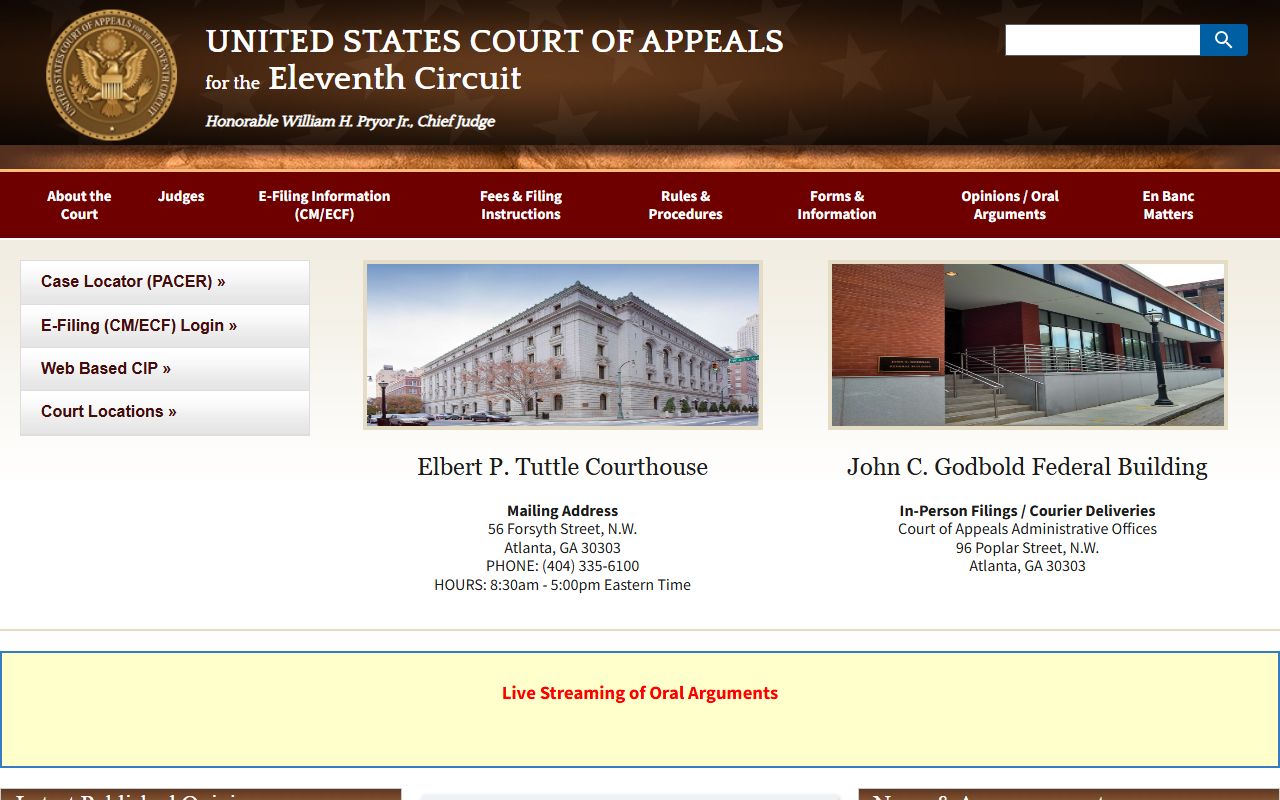
State Superior Court appeals and federal appeals use separate court systems, so the record search must follow the case's court of origin.
Effingham Lower Court Records
Magistrate Court is the most important lower-court record source for many Effingham County residents. It handles small claims, dispossessory proceedings, garnishments, personal-property foreclosure, abandoned vehicles, bad-check applications, pre-warrant applications, county ordinance hearings, search warrants, arrest warrants, and bail where not assigned exclusively to another court. Its ordinary civil jurisdiction is $15,000 except dispossessory cases. Claims over that limit move to State Court or Superior Court.
Municipal court records should be kept separate from county Superior Court records. Rincon Municipal Court handles traffic sessions on the second and fourth Thursday except in November and December, and Guyton Municipal Court handles city traffic citations with a first-Wednesday monthly schedule. A city traffic citation may need the city court or vendor payment route, not the Clerk of Superior Court case search.
Probate Court records also sit outside Superior Court unless an appeal or related civil matter creates a separate Superior Court file. Estates, wills, guardianships, conservatorships, marriage licenses, and vital records belong to Probate Court first. For a complete county record search, match each case type to the office that keeps it, then use the clerk, court, phone, in-person, or statewide channel documented for that record class.