
Effingham County Criminal Court Records
A criminal court record is the court's case file after the case opens. It can show the charging document, arraignment, plea, motion practice, hearing entries, trial activity, verdict or plea result, disposition, sentence, probation terms, restitution, and appeal entries. This differs from a booking record. Jail booking may show the arrest event and initial booking charge, while the court record shows what the prosecutor filed and what the judge did with the case.
Superior Court handles felony prosecutions in Effingham County as part of the Ogeechee Judicial Circuit. State Court and Magistrate Court may handle misdemeanor, ordinance, warrant, bond, preliminary, and traffic-adjacent criminal matters as Georgia law and local practice assign them. The Clerk of Superior Court keeps Superior Court, State Court, and Juvenile Court record functions, but juvenile criminal matters are not open for general public search.
The manifest image from the Effingham County Magistrate Criminal Division page connects criminal court records to local warrant, bad-check, and restraining-order routing.
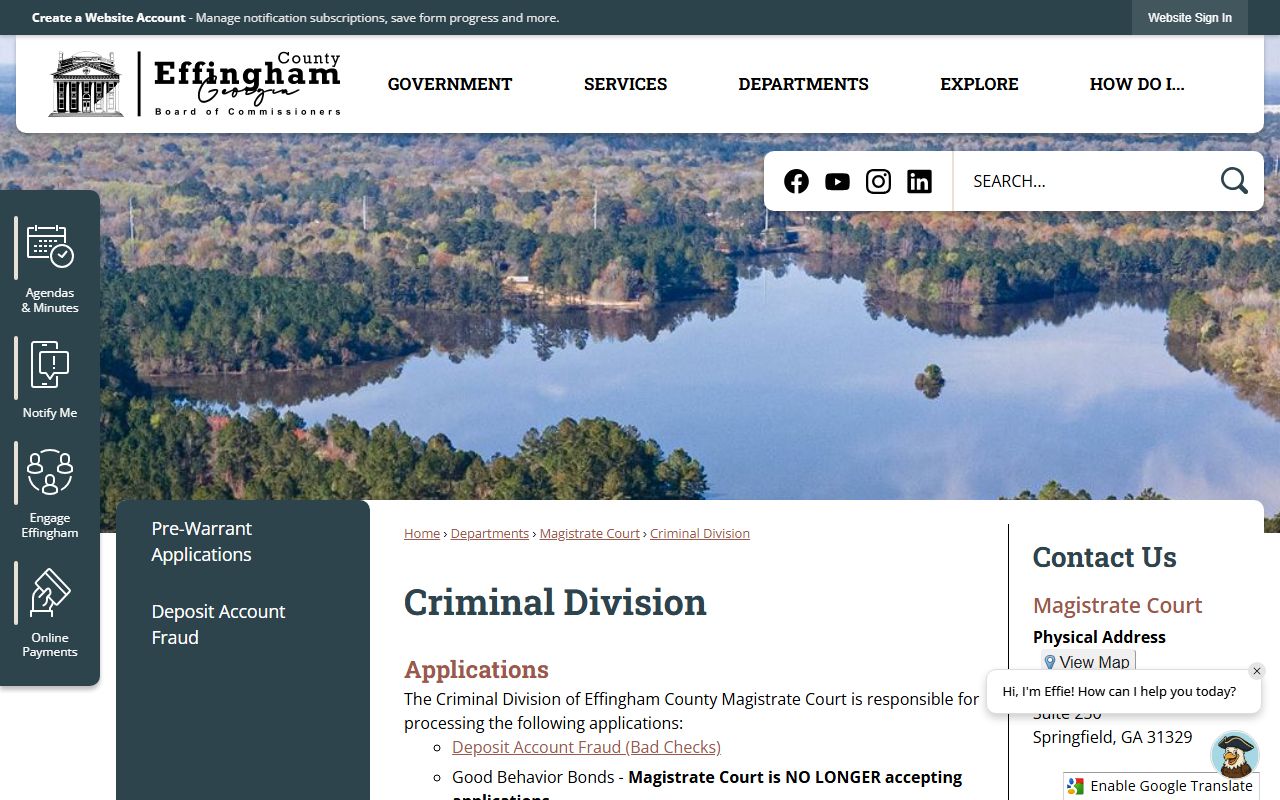
That local division is important because some criminal events begin in Magistrate Court before a full Superior or State Court case file matures.
Search Effingham County Criminal Records
The first online path is the Clerk Case Management page, which links to the court docket search for Superior and State Court matters. Use the case number if it is known. If the portal offers a court code, select the court that matches the case type. Felony criminal cases belong with Superior Court; State Court may appear for misdemeanor, traffic, or other case types assigned there. If the case does not appear, check spelling, court level, and whether it may still be in warrant, bond, or pre-filing status.
- Open the Clerk Case Management page and use the Court Docket Search link.
- Select Effingham County Superior Court or State Court when the portal asks for a court code.
- Search by case number first. If name search is available, use spelling variations.
- Read the docket for the charge list, arraignment, plea, motions, hearings, disposition, and sentence entries.
- Request certified copies from the Clerk when a docket entry is not enough for legal use.
The broader Effingham County court records search covers civil, family, probate, traffic, Magistrate, and municipal channels outside the criminal case file.
Effingham County Criminal Case Flow
Criminal court records change as the case moves. An early docket may show only the charge, first appearance, bond, or arraignment. Later entries can add motions, plea negotiations, trial settings, sentencing, probation conditions, restitution, or appeal notices. If a warrant or booking record exists before the case is filed, the court record may not yet show the final prosecutor charging decision.
Case flow: Charges Filed › Arraignment › Pretrial / Motions › Plea or Trial › Disposition › Sentencing
| Stage | What Happens |
|---|---|
| Charges Filed | The prosecutor files an accusation, indictment, or other charging document, or a case begins from a complaint or warrant path. |
| Arraignment | The defendant is advised of the charge and enters a plea or receives a later plea deadline. |
| Pretrial / Motions | Attorneys file requests, discovery issues are handled, hearings are set, and plea talks may occur. |
| Plea or Trial | The case resolves by plea, bench trial, jury trial, dismissal, or another court order. |
| Sentencing | The court enters jail, prison, probation, fine, restitution, treatment, or other sentence terms when a conviction results. |
Effingham County Criminal Record Fields
Effingham County criminal court records can show a mix of party, charge, timing, and outcome fields. A docket is the event list, while certified papers from the Clerk prove the content of orders, pleas, and sentencing. The court record can include charges that were later amended, reduced, dismissed, or resolved by plea. That is why the disposition field matters as much as the charge field.
| Field | What It Shows |
|---|---|
| Case Number | The court identifier for the criminal case. |
| Defendant | The person charged in the court case, distinct from any victim or complainant. |
| Charges | The offense or offenses filed by accusation, indictment, complaint, or related charging paper. |
| Arraignment / Plea | The formal answer to the charge, such as guilty, not guilty, or nolo contendere if entered. |
| Disposition | The current or final court result, including dismissal, plea, verdict, or other order. |
| Sentence | Any jail, prison, probation, fine, restitution, treatment court, or other term imposed after conviction. |
Effingham County Criminal Court Roles
Effingham County is in the Ogeechee Judicial Circuit. The District Attorney prosecutes Superior Court felony matters and other criminal cases assigned to that office. Research captured the official Effingham County directory listing Jillian Gibson as Acting District Attorney, while recent May 2026 news reported the death of District Attorney D. Robert Busbee. Because that role is time-sensitive, current charging questions should be checked against the official directory before naming a prosecutor in a court filing.
The Georgia Public Defender Council Ogeechee Circuit page lists Renata Newbill-Jallow as Circuit Public Defender and shows that Bulloch, Effingham, Jenkins, and Screven counties are served. A public defender record is not the same as the public court file, but the defender's role may appear through attorney fields, motions, pleas, and hearing entries in the criminal court docket.
The manifest image from the Effingham District Attorney staff directory shows the official directory source used for local prosecutor context.
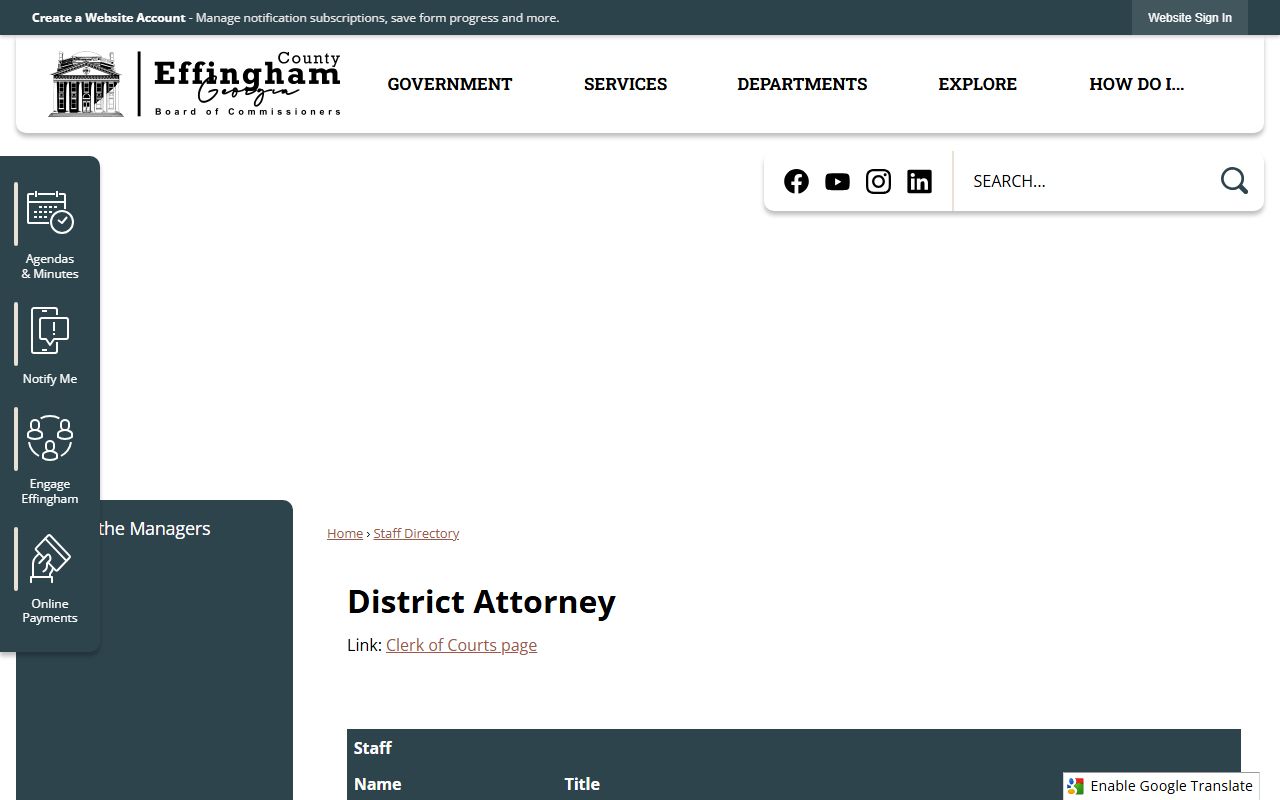
Directory sources should control current prosecutor names because criminal charging authority can change after elections, appointments, or vacancies.
The manifest image from the Ogeechee Circuit Public Defender page identifies the local defense office for qualifying defendants.
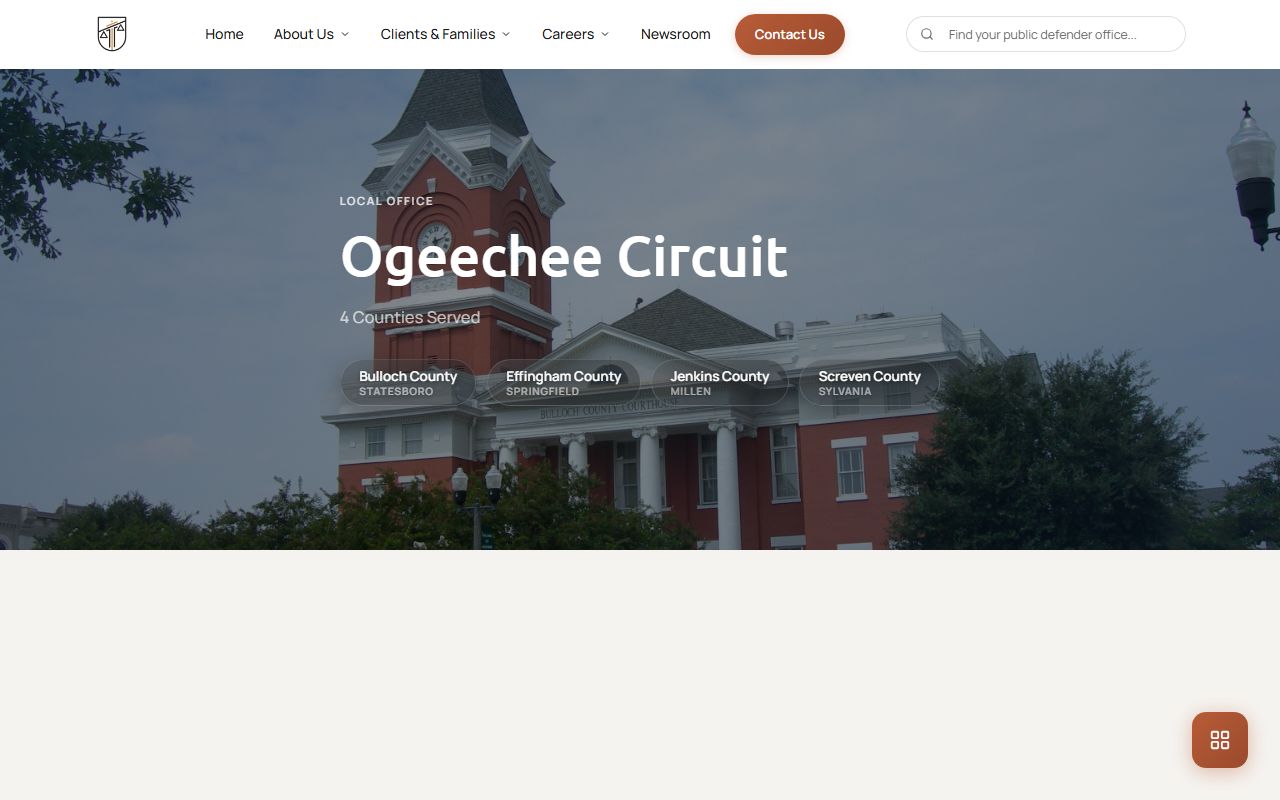
That office context helps distinguish court-file access from legal representation and eligibility for appointed counsel.
Effingham County Charges vs Convictions
A charge is an accusation filed in court. A conviction is a result after a guilty plea, verdict, or other qualifying adjudication. Effingham County criminal court records may show charges that were pending, amended, reduced, dropped, dismissed, or tried. Treat the disposition and sentence as the outcome fields. Do not read the existence of a charge as proof of a conviction.
| Charge | Conviction | |
|---|---|---|
| Stage | Filed early in the case | Entered after plea, verdict, or qualifying judgment |
| Meaning | An allegation or count to be resolved | A court outcome with legal effect |
| Where It Appears | Booking, warrant, bond, docket, accusation, or indictment | Disposition, sentence, judgment, and reported criminal history where applicable |
| Can Change | May be amended, reduced, or dismissed | May be appealed, restricted, modified, or corrected by court order |
Effingham County Criminal Record Access
Georgia public-record law and court rules favor public access to court records unless a law, court order, or rule limits release. O.C.G.A. § 50-18-70 sets the open-records policy, and O.C.G.A. § 50-18-71 covers inspection and copying procedures. Uniform Superior Court Rule 21 also frames public access for superior-court records.
Criminal-history dissemination is different from court-file access. The GBI record restriction page explains Georgia's record-restriction process under O.C.G.A. § 35-3-37. Effingham Sheriff's Criminal History page says local background checks and restrictions run through the Warrant Division and describes walk-in hours and fees. That process affects criminal-history access, but it does not automatically erase each docket entry or court order.
The manifest image from the Effingham Sheriff's Criminal History page shows the local criminal-history and restriction channel.
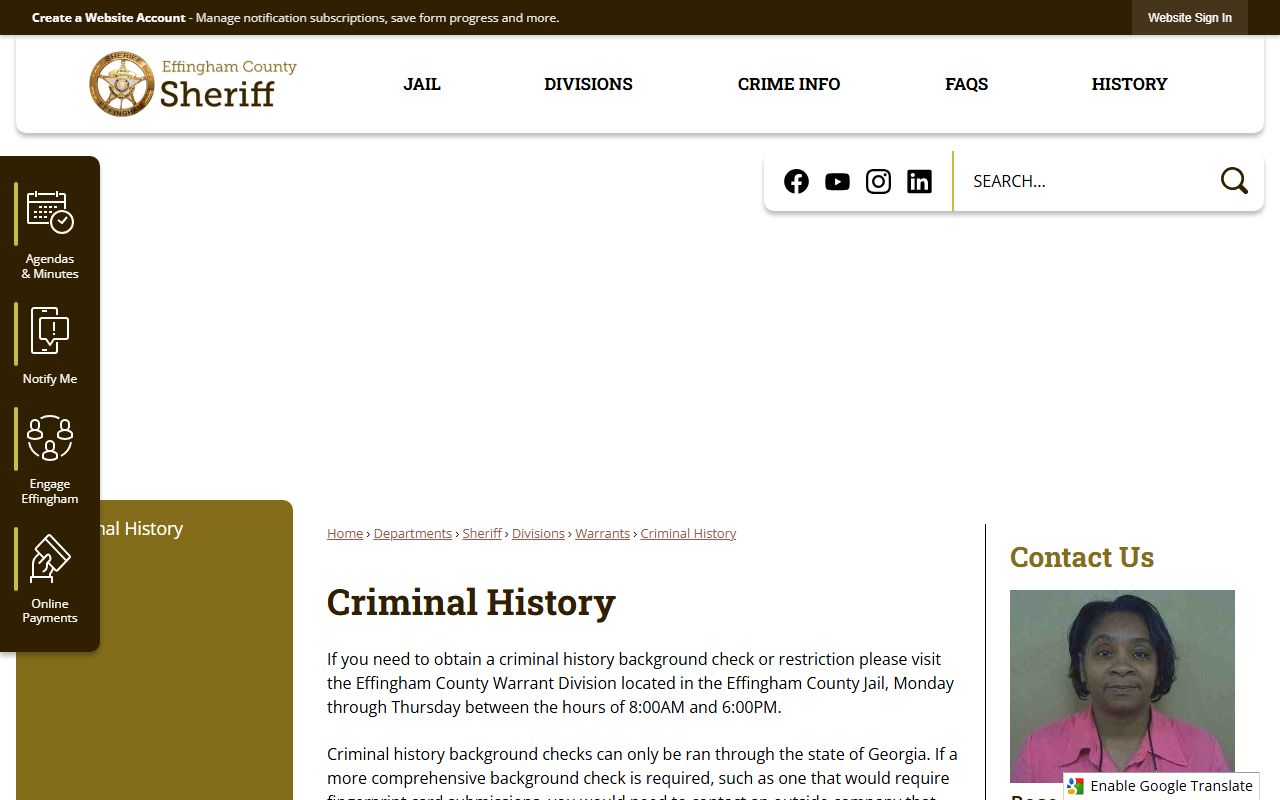
That Sheriff source is relevant for background checks and restrictions, while certified criminal case copies still come from the court clerk.
The manifest image from the GBI criminal-history restriction page supplies the state-level restriction source.
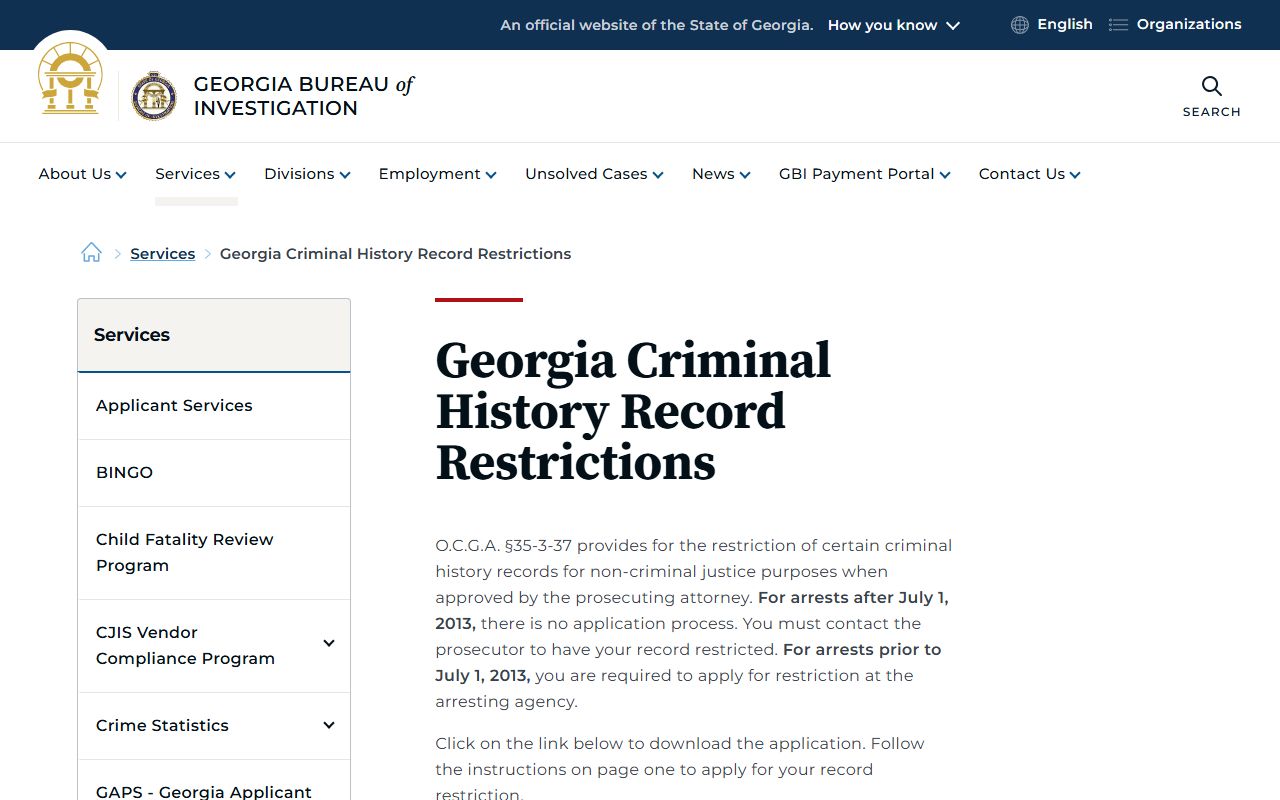
GBI guidance matters when a person is trying to limit non-criminal-justice access to eligible criminal-history records.
Effingham County Restricted Criminal Records
Georgia research for Effingham County uses record restriction rather than a broad expungement label for many criminal-history limits. A restricted record may be limited for non-criminal-justice dissemination, while a sealed court file is hidden from ordinary public court access by law or court order. Juvenile matters, adoption files, confidential victim details, minor names, full dates of birth, account numbers, and mental-health information may be withheld or redacted.
| Sealed Court File | Restricted Criminal History | |
|---|---|---|
| Applies To | The court file or parts of it | Criminal-history dissemination to non-criminal-justice users |
| Handled By | The court through law, rule, or order | Arresting agency, prosecutor, GBI rules, and local restriction process |
| Public Portal Effect | May hide entries or documents | May not remove every public court record |
| Effingham Channel | Contact the court or Clerk that keeps the case | Sheriff's Warrant Division and prosecutor path based on arrest date |
Important: Criminal court records cannot be used for FCRA-regulated decisions without a lawful consumer-reporting process.
Effingham County Criminal Copy Requests
Use the Clerk of Superior Court for certified criminal case copies from Superior or State Court. The Clerk office is at 700 N. Pine Street, Suite 110, Springfield, with general Clerk phone 912-754-2118 and civil/criminal phone 912-754-2146. If the matter is only a jail booking, bond, or custody question, use the Sheriff's Office or jail channel first. If the matter is still a warrant application or bad-check complaint, Magistrate Court may be the correct starting point.
The Ogeechee Circuit Mental Health and Drug Court program may appear in local criminal case context when a defendant is referred to treatment-court supervision. It began with Mental Health Court in Bulloch County in 2013 and expanded Mental Health Court and Drug Court circuitwide in 2018. Treatment details are sensitive, so public court records may show limited status without revealing protected health information.
Clerk of Superior Court
700 N. Pine Street, Suite 110
Springfield, GA 31329
912-754-2146
Criminal and civil records