
Effingham County Arrest Records
Effingham County arrest records identify the arrest and booking side of a criminal event. The Sheriff's Office and jail channels may show booking, custody, bond, or jail status information, while the court system shows the charges that move into a case. The official research found an Effingham County Booking Desk page that links to the BlueHorse jail booking desk, but direct inspection of the vendor page was access-limited during research. That means no public claim should be made that every mugshot, roster field, or booking record is available from the court charge page.
Court charge records are narrower than the full criminal case file and broader than the booking event. A charge record identifies what was filed against the defendant, who filed or prosecuted it, whether the charge is pending, amended, reduced, dismissed, or resolved, and whether the charge later becomes a conviction. For jail roster and custody detail, use the inmate page. For the full prosecution record and sentence, use the Effingham County criminal court records page.
The manifest image from the Effingham County Booking Desk page shows the local booking channel tied to arrest records.
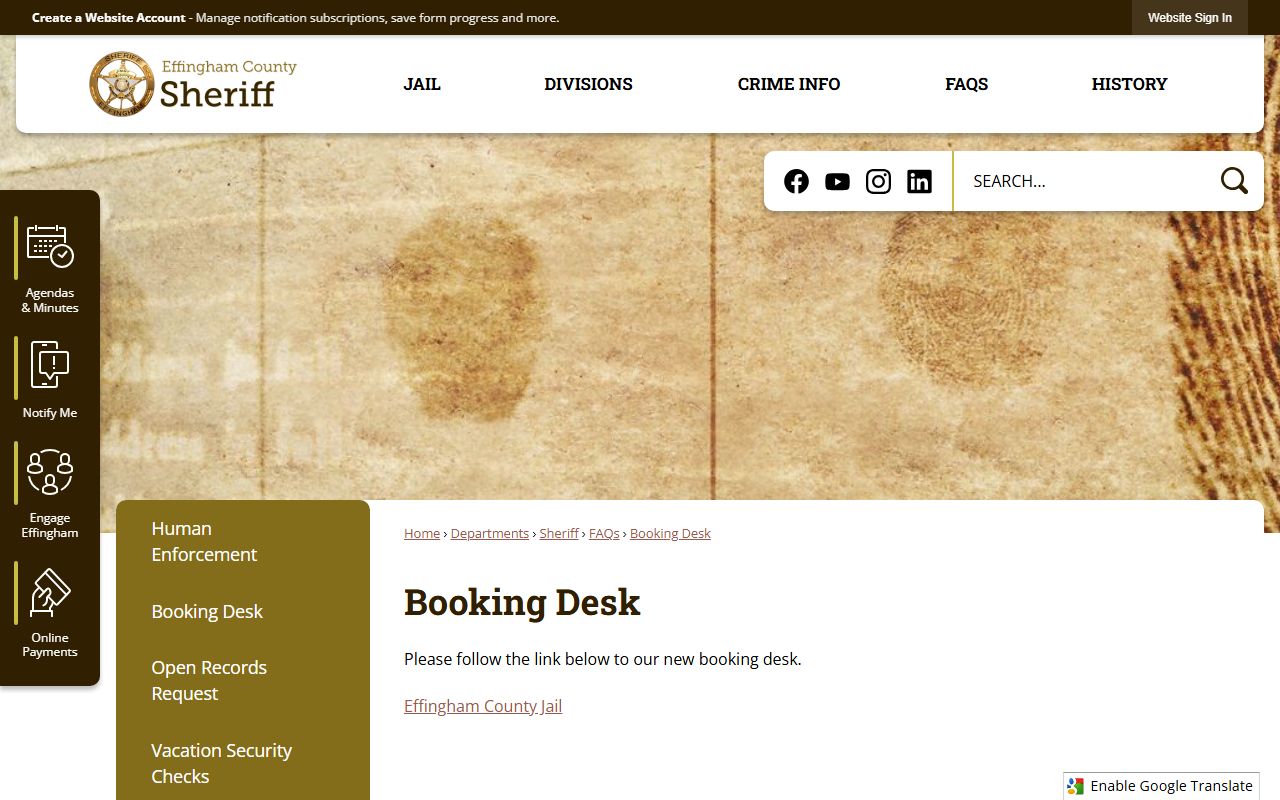
That source helps locate booking information, while the court charge record must still be checked through court and prosecutor channels.
Find Effingham County Arrest Records
Begin with the event you need to verify. If the question is custody, booking, bond, or release, start with the Sheriff's Office, jail, Booking Desk, or Georgia Department of Corrections path. If the question is what charges were filed in court, start with the Clerk Case Management court docket search for Superior and State Court records or with Magistrate Court when the matter began as a warrant, bad-check, ordinance, or preliminary issue.
- Use the Booking Desk or jail channel for current custody, booking, and bond questions.
- Open the Clerk Case Management docket search when formal charges have become a Superior or State Court case.
- Check Magistrate Court for pre-warrant applications, deposit-account-fraud warrants, bond, and ordinance matters.
- Read the court charge entry for offense name, filing date, charge status, disposition, and sentence if present.
- Use the Clerk or court office for certified copies or charges that do not display in the public portal.
The manifest image from the Sheriff online bond payments page shows a related post-booking channel.
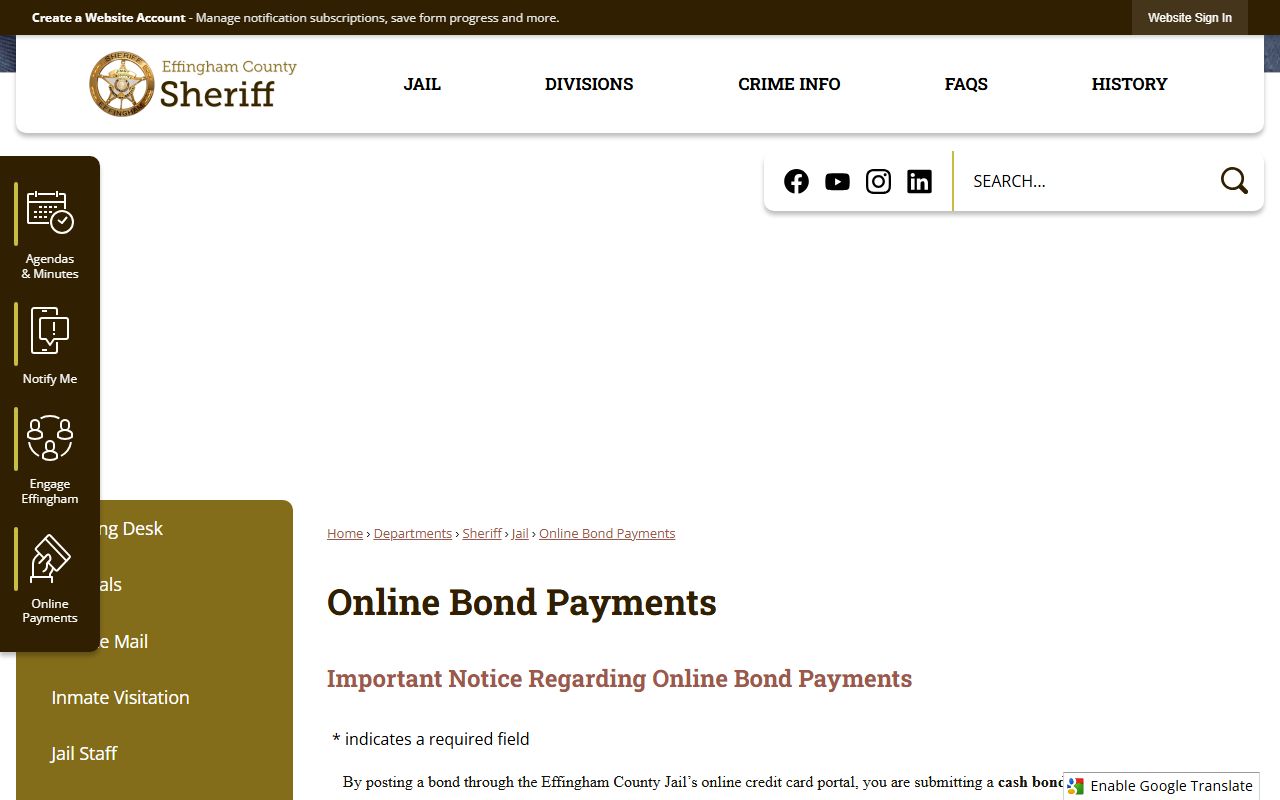
Bond information may explain release status, but it does not prove the final charge outcome or conviction status.
Effingham County Charges After Arrest
After an arrest, the court charge record is built from the legal paper that states the accusation. In Georgia criminal practice, the paper may be a complaint or warrant-related filing, an accusation by the prosecutor, or an indictment from a grand jury. Effingham County is in the Ogeechee Judicial Circuit, so the District Attorney's office has a key role in prosecuting Superior Court felony charges. Magistrate Court can handle warrant applications and certain early criminal processes.
| Document | Who Uses It | Effingham County Context |
|---|---|---|
| Complaint | Law enforcement, complainant, or court process | May appear in Magistrate or early case materials before formal prosecution moves forward. |
| Accusation | Prosecutor | Can be used for criminal charges where a prosecutor files the formal accusation. |
| Indictment | Grand jury | Common for felony prosecution in Superior Court and tracked in the criminal case file. |
Effingham County Charge Status
Charge status is the key field that keeps an arrest record from being misread. One arrest can produce several separate charges, and not every charge ends the same way. A charge can be pending while the case is open, amended when the prosecutor changes language or statute detail, reduced through plea negotiations, dismissed by the court, or marked nolle prosequi when the prosecutor declines to pursue it further.
| Status | What It Means |
|---|---|
| Pending | The charge is open and has not reached a final court result. |
| Amended | The charge language, count, or statutory basis changed after filing. |
| Reduced | The charge was lowered to a lesser offense, often through plea or prosecutor action. |
| Dismissed | The court removed the charge or the case ended without that charge moving forward. |
| Nolle Prosequi | The prosecutor chose not to continue prosecution of the charge. |
| Convicted | The charge resulted in a guilty plea, verdict, or qualifying judgment. |
Note: Charge status should be checked against the court disposition before treating an arrest record as a conviction.
Effingham County Charges vs Convictions
A charge is not the same thing as a conviction. The charge is the accusation after arrest or filing. A conviction is a court result. Effingham County arrest records may show the initial booked offense, while the court charge record may later show a different filed charge, reduced count, dismissal, plea, sentence, or restriction. Read the whole chain before drawing a conclusion.
| Charge | Conviction | |
|---|---|---|
| Stage | Appears before final judgment | Appears after plea, verdict, or qualifying judgment |
| Proof Level | Based on accusation, probable cause, or prosecutor filing | Based on court adjudication |
| Can Change | May be amended, reduced, added, dropped, or dismissed | May be appealed, corrected, restricted, or modified by order |
| Best Source | Booking, warrant, bond, docket, accusation, or indictment | Disposition, sentence, judgment, and certified court record |
Effingham County Charge Follow-Up
Not every person connected to Effingham County is held in the county jail after court. The jail page distinguishes local jail receiving, processing, and housing from sentenced state custody. The Georgia Department of Corrections lists Effingham County Jail as a location, and the GDC offender query can be used for sentenced state-inmate searches. Federal custody is separate again and uses the Bureau of Prisons inmate locator.
The manifest image from the Georgia Department of Corrections Effingham County Jail location page connects local arrest records with state custody context.
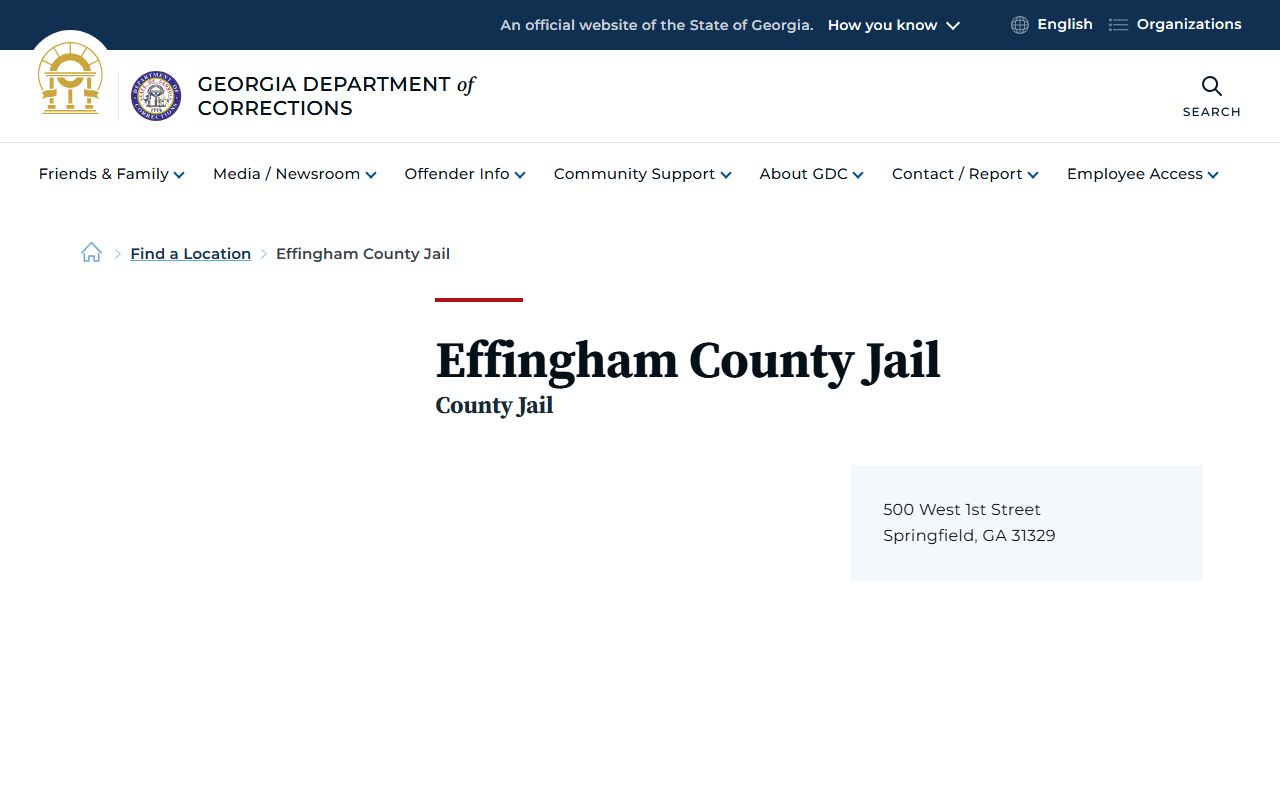
GDC location information helps after sentencing or transfer, but court charge status must still be read from court records.
The manifest image from the Georgia Department of Corrections offender query points to the state search channel for sentenced offenders.
That query is not a substitute for a county court docket because it tracks correctional custody rather than every filed charge.
The manifest image from the Federal Bureau of Prisons inmate locator shows the separate federal custody path.
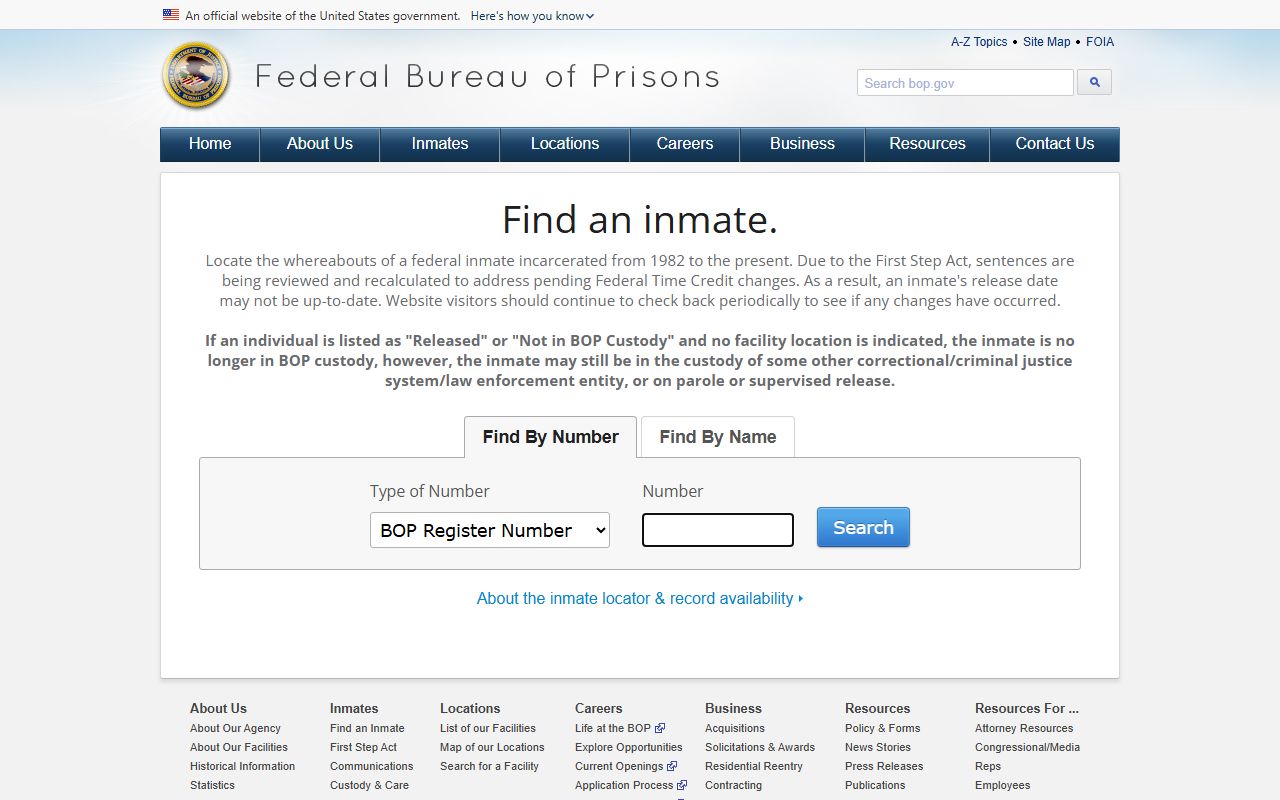
Federal custody records may matter after a federal prosecution, but they do not replace Effingham County court charge records.
Effingham County Warrants and Charges
Magistrate Court is central to local warrant and early charge workflows. Pre-warrant applications require a police report, defendant mailing address, in-person application, and a hearing. Deposit-account-fraud warrant applications have their own venue and filing rules. A judge may issue a warrant if probable cause appears. Bond entries can appear before final charge resolution and should not be read as a conviction.
The Sheriff's online bond payment source warns that cash bond paid online returns to the arrestee unless surety paperwork is completed in person before release. Holds or detainers can also affect release. Those bond facts may explain why someone remains in custody even when a case docket is sparse. The charge record is still the court's track of what was filed and how it moved.
- Use Magistrate Court for pre-warrant and bad-check warrant applications.
- Use the Sheriff's Booking Desk or jail for custody and bond questions.
- Use the Clerk case search for charges filed in Superior or State Court.
- Use Rincon or Guyton municipal court for city traffic and ordinance charges.
Restricted Effingham County Charge Records
Some arrest records and charge records are restricted, redacted, or withheld. Juvenile matters are not general public files. Sealed charges, active investigations, confidential victim information, minor names, full birth dates, Social Security numbers, and mental-health details may be removed from public copies. Adoption records and some family-related files have their own restrictions even when a criminal case is not involved.
Georgia criminal-history restriction under O.C.G.A. § 35-3-37 can limit dissemination of eligible criminal-history information. The GBI process depends on arrest date, and Effingham Sheriff's Criminal History page says local restriction matters can be handled at the Warrant Division. Court sealing is separate. A restricted criminal-history record does not always remove every public court docket entry.
| Sealed | Restricted | |
|---|---|---|
| Primary Effect | Limits public court-file access | Limits criminal-history dissemination for eligible records |
| Where to Start | The court that keeps the case | Arresting agency, prosecutor, GBI guidance, or Sheriff's Warrant Division |
| Public Docket | May hide entries or documents | May still show some court activity unless separately sealed |
Important: Arrest records and charges cannot be used for FCRA-regulated decisions without a lawful consumer-reporting process.